
 DE
DE  EN
EN Platform reporting
Reporting, Power and CO₂ Analysis
Auto Shutdown Manager by EnviProt turns endpoint runtime, shutdown and wake data into practical reports for IT operations, energy management and business-case validation.
From policy to proof
Show what changed, not just what was configured
Power management only becomes credible when IT can show runtime, cost, energy and environmental impact with data. ASDM reporting connects endpoint telemetry with the shutdown and wake decisions that created the result.
Runtime and uptime visibility
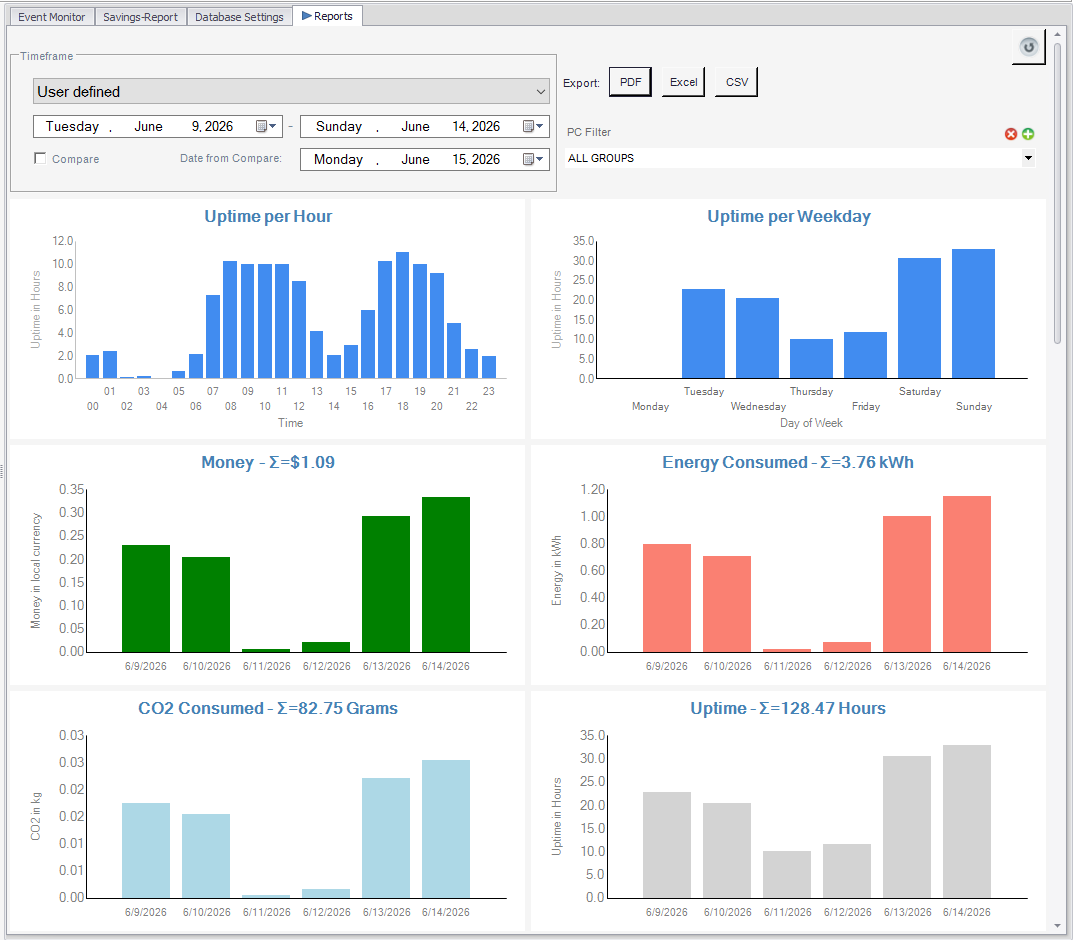
See when endpoints are powered on, where runtime accumulates and which time windows create the biggest optimization potential.
Cost, energy and CO₂ estimates
Translate runtime into electricity cost, energy consumption and estimated CO₂ output based on configured values and available telemetry.
Source-aware savings proof
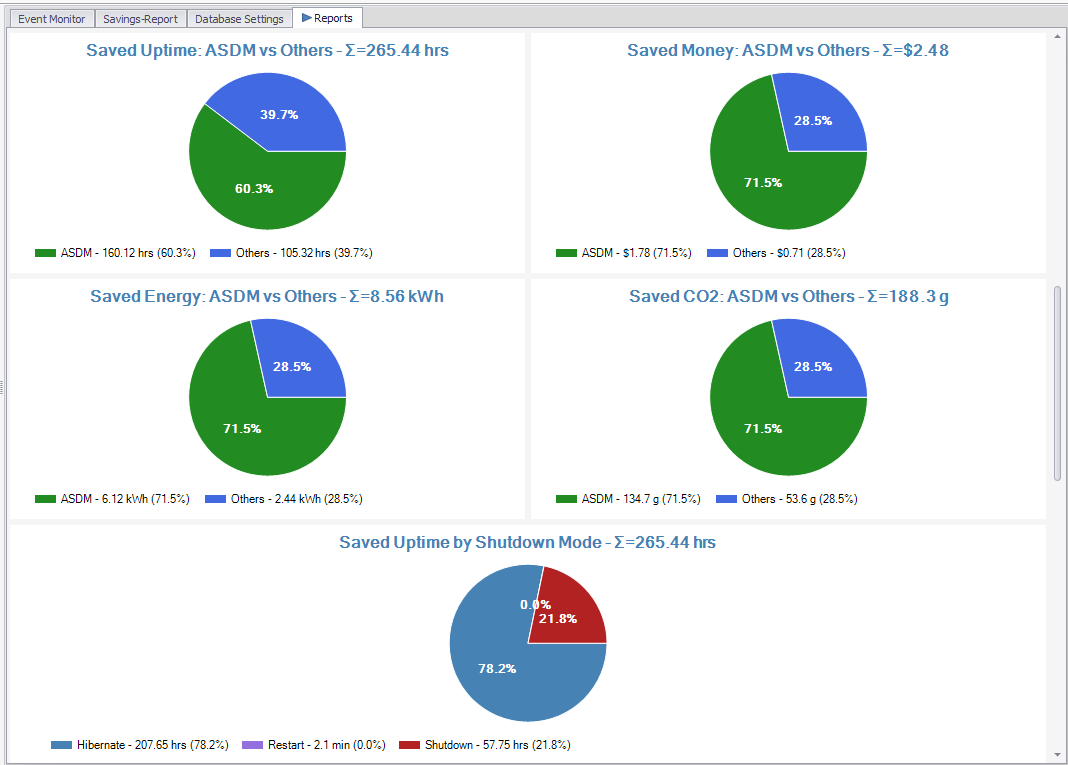
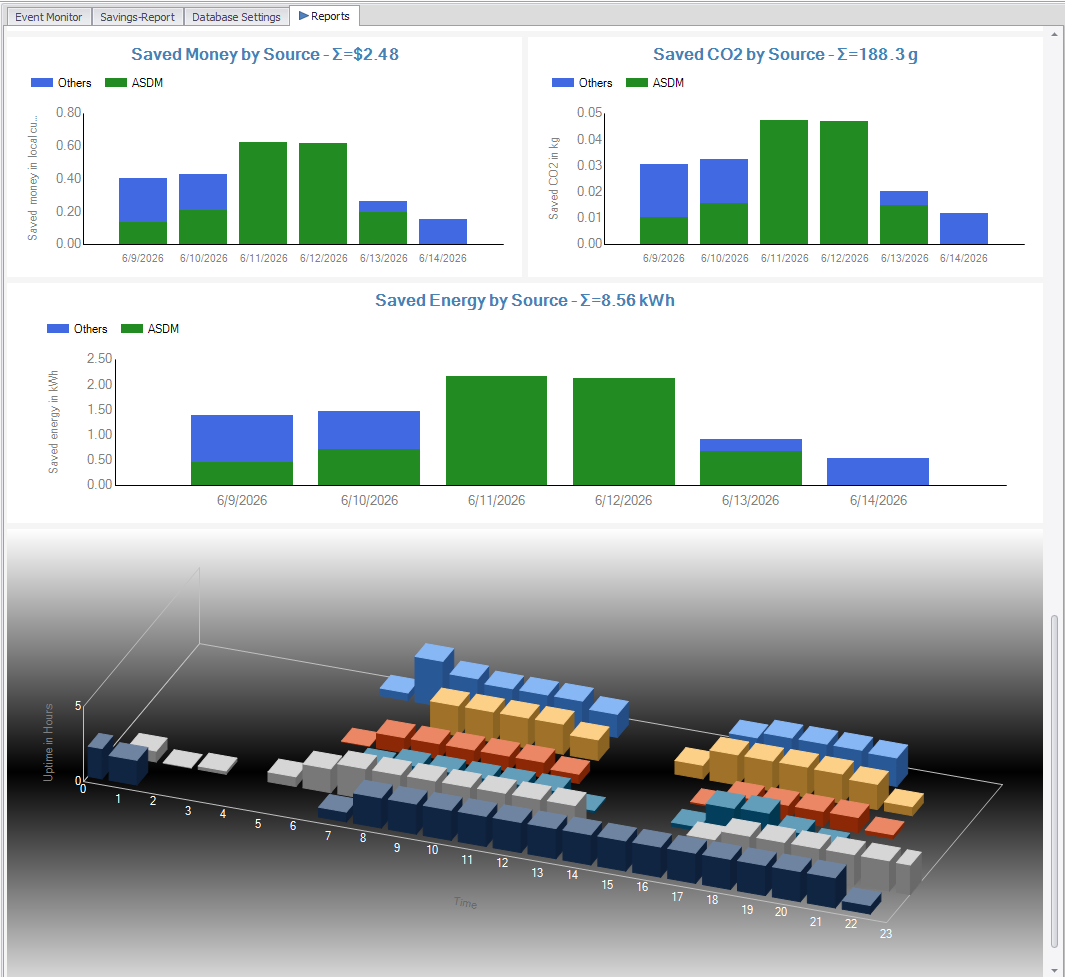
Break down savings by shutdown source, including ASDM-triggered actions and other shutdown sources, so the result can be explained.
Product proof
Reporting inside the ASDM management console
The reporting tab can visualize uptime by hour and weekday, money, energy, CO₂ and saved uptime. Exports are available for PDF, Excel and CSV where reporting is configured.


Why dedicated reporting matters
From raw runtime data to management-ready evidence
ASDM reporting is designed to support IT troubleshooting and business communication without turning the power-management project into a spreadsheet exercise.
Use cases
Who uses the reports?
The same data can answer different questions depending on who is looking at the power-management project.
IT administrators
Find runtime patterns, validate policies and identify groups that still run longer than expected.
IT leadership
Track progress of rollout, policy tuning and endpoint availability across larger environments.
Finance and procurement
Review estimated cost impact and compare documented savings against license and rollout decisions.
Sustainability teams
Use kWh and estimated CO₂ data as supporting evidence for Green IT, ESG-related reporting inputs and energy-management initiatives.
Claim-safe reporting
Reports document results from your environment.
ASDM does not promise the same savings for every organization. Results depend on device population, configured policies, user behaviour, energy prices, calculation assumptions and the reporting period. The right promise is simple: measure, tune, validate and document.
FAQ
Reporting & CO₂ questions
Does ASDM promise the same saving everywhere?
No. Savings must be measured in the actual environment. ASDM helps document runtime, energy and estimated CO₂ impact so the project can be validated with real data.
Can reports be filtered by groups or PCs?
Yes, reports can be used with group and PC filters where reporting data is available, helping IT compare pilots, departments, sites or policy groups.
Can results be exported?
The reporting UI supports export options such as PDF, Excel and CSV, making it easier to share data with IT leadership, finance or sustainability teams.
Is CO₂ data exact?
CO₂ values are estimates based on configured emission factors and measured or calculated energy consumption. They should be treated as reporting support, not as a universal certification value.
Can ASDM support ESG or CSRD-related reporting?
ASDM is not a CSRD compliance system. It can provide supporting endpoint runtime, energy and estimated CO₂ data that may help internal Green IT, ESG or CSRD-related reporting workflows, depending on your reporting scope and calculation assumptions.
Prove the savings
Turn endpoint power management into measurable evidence.
Start with a controlled pilot, review uptime and energy data, then use reporting to decide which policies are ready to scale.