 DE
DE  EN
EN 
Case studies
Case studies: measured savings and operational results
From school districts and universities to 24/7 healthcare, these customer stories show how IT teams used Auto Shutdown Manager (ASDM) to coordinate maintenance, reduce unnecessary runtime and still stay in control of active systems.
Proven at scale
Examples from large, distributed PC environments
These deployments show how ASDM was used across multiple sites and subnets.
PCs under central control
A centrally managed environment with more than 80,000 endpoints.
PCs on one server
Large deployments managed from a single ASDM Server.
Subnetworks in one environment
Support for campuses, branch offices, VLANs and other distributed network structures.
Customer stories
How customers used ASDM
The case studies cover scheduled updates, document protection, classroom PCs and shutdown rules across multiple sites.
Mesquite ISD: maintenance before staff arrive
Mesquite Independent School District needed one dependable process for power control and software maintenance across a widely distributed estate.
- ASDM worked with the district’s existing Microsoft SCCM workflow.
- Endpoints were organised into six centrally managed groups.
- PCs shut down at 7:00 p.m. and woke at 5:00 a.m. so updates could finish before teachers arrived.
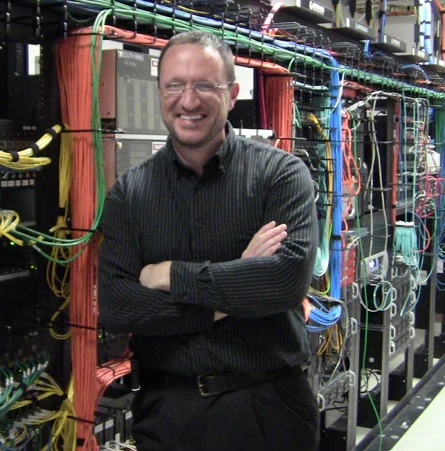
The district scheduled shutdown and wake-up around its SCCM updates across 47 campuses.
Why IT teams care about this deployment
- Wake-up timing was aligned with the district’s update routine.
- Power control became part of daily operations instead of a manual exception process.
- The result was operational consistency across campuses rather than a one-off local fix.
UC Berkeley: savings backed by measurement
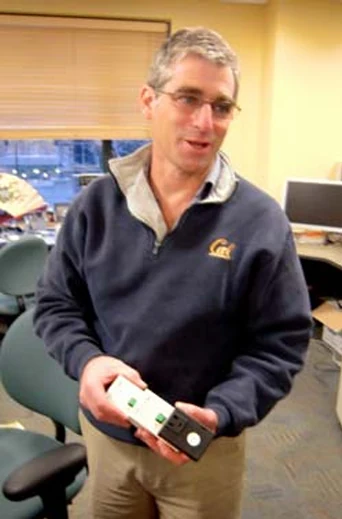
UC Berkeley paired ASDM with wireless power meters in the LoCal project to check how much unnecessary desktop runtime could actually be removed.
- The published study reported roughly 80% avoided energy expenditure for the monitored desktop population.
- More than 60% of ASDM-equipped PCs showed energy savings of 90% or more.
- The platform was described as stable and ready to scale across departments.
The Berkeley study measured PC power use to check the savings, rather than relying on shutdown schedules alone.
Why this story matters
- The study focused on measured power behaviour, not only on theoretical savings.
- It connects endpoint power management with sustainability reporting and campus operations.
- It shows that ASDM can fit into a broader energy-efficiency program.
24/7 healthcare
A hospital cannot simply switch everything off at 6 p.m.
Kliniken Essen-Mitte needed to reduce runtime across approximately 800 PCs without interrupting emergency work, shift patterns or open documents. ASDM used central policies and local activity checks to shut systems down only when they were genuinely idle.
What the hospital needed from power control
- Flexible rules instead of one fixed shutdown time.
- Open documents protected before shutdown.
- Lower power consumption without disrupting clinical workflows.
More customer results
Different shutdown schedules for classrooms, labs, and university PCs
Schools and universities used ASDM for more than after-hours shutdown. They also used it to protect workstations, stage different shutdown windows and keep administration effort low.
Herricks: different rules for classrooms, labs and building systems
Herricks Union Free School District used ASDM across five schools. Teacher workstations logged off shortly after the bell, computer labs shut down later in the day and the remaining systems followed at night.
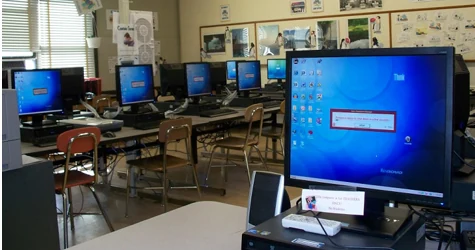
Herricks used different logoff and shutdown times for teacher workstations, labs and other PCs.
Why this is operationally useful
- Classrooms, labs and shared spaces can follow different timing rules.
- Teacher workstations do not have to remain signed in between sessions.
- IT keeps control without asking staff to remember the process.
Osnabrück: fast payback, low ongoing effort
The University of Applied Sciences Osnabrück deployed ASDM on more than 120 computers and reported stable operation with little ongoing administration.
The investment paid for itself in approximately four weeks while reducing unnecessary runtime across the network.
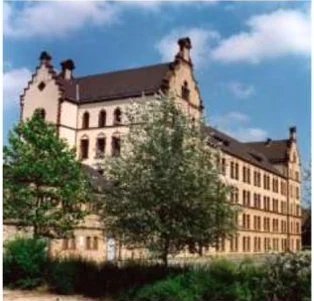
Osnabrück reported an expected payback of about four weeks, with little ongoing administration.
Why IT teams like this type of rollout
- The deployment stayed manageable.
- The outcome was visible quickly.
- Ongoing administration remained limited after rollout.
Original customer documents
Read the source material behind the results
Each PDF describes the original customer environment and the reported outcome in more detail.
District deployments
Measured savings and ROI
Power control around clinical work
Source context
Customer case studies and results
These case studies describe the systems and results at the time of publication. Use them to plan a pilot, then check the savings and IT workload in your own environment.
FAQ
Questions IT teams usually ask next
Which story is closest to a large distributed Windows environment?
Mesquite is the clearest example: 8,500 PCs across 47 campuses, organised into centrally managed groups and coordinated with an existing SCCM workflow.
Are the reported savings directly transferable to our environment?
No. Runtime, user behaviour, electricity prices, hardware and maintenance schedules differ. Use the customer documents as proof that ASDM can deliver measurable results, then validate your own baseline with the ROI calculator and a controlled trial.
How should we build our own business case?
Start with after-hours runtime and current energy costs. Then test shutdown, wake-up and maintenance workflows on a representative pilot group before extending the policy across the estate.
Build your own proof
Measure ASDM against your endpoints, maintenance windows and energy costs
Run a controlled pilot, verify safe shutdown and reliable wake-up, and compare the result with your own operational baseline.